
The workshop on Statistics in Metric Spaces was held at ENSAE, on October 11, 12 and 13, 2023. It brought together international experts in the joint fields of statistics, optimization, probability theory and geometry. Each participant gave a 45-60 min talk and the range of topics that were covered was broad, tackling modern questions concerning statistical analysis on non-standard spaces.
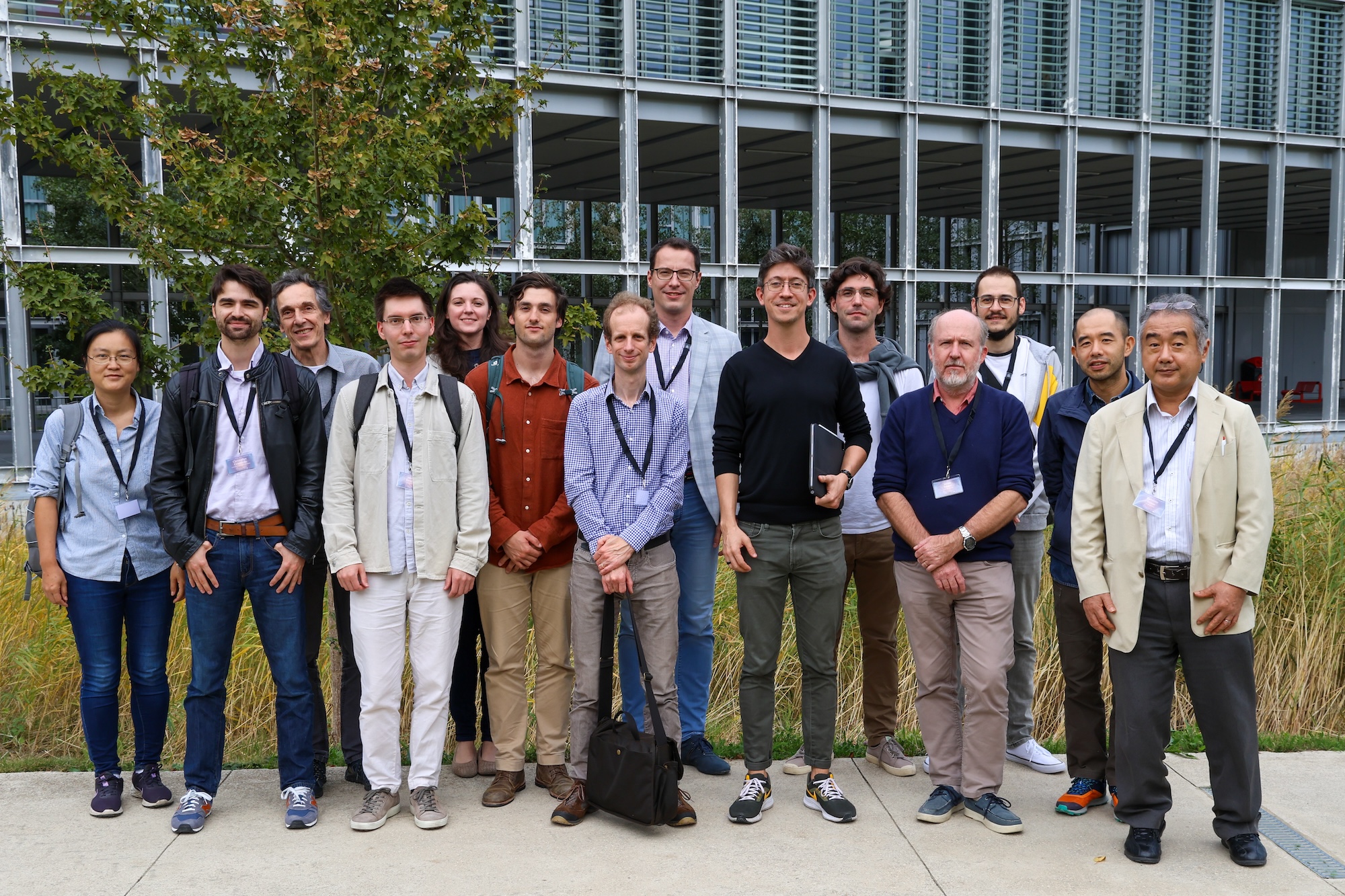
Victor-Emmanuel Brunel (CREST-ENSAE), Christopher Criscitiello (EPFL), Stephan Huckemann (Georg-August-Universität Göttingen), Alexey Kroshnin (Weierstrass-Institut Für Angewandte Analysis und Stochastik), Kazuhiro Kuwae (Fukuoka University), Tom Nye (Newcastle University), Shin-ichi Ohta (Osaka University), Miklós Pálfia (Corvinus University of Budapest), Pierre Pansu (Université Paris-Saclay), Quentin Paris (HSE University), Xavier Pennec (INRIA), Gabriel Romon (CREST-ENSAE), Jordan Serres (CREST-ENSAE), Austin Stromme (CREST-ENSAE)
While available data become more and more rich and complex, it is essential to understand their intrinsic geometry, for instance as a tool of dimensionality reduction or, sometimes, in order to produce interpretable statistical procedures. This, however, also comes at a cost, since these geometries may be non-standard (e.g., non-linear and/or non-smooth geometries), yielding new challenges from the points of view of both statistical and algorithmic analysis.
For instance, directional data lie on spheres or projective spaces. In shape statistics, data are encoded as landmarks on three-dimensional objects, which should be invariant under rigid transformations: Hence, data lie in the quotient of a Euclidean space by a class of rigid transformations. In fact, such quotient spaces are also useful to understand statistical models that arise in econometrics, when a parameter is only identifiable up to some known transformations. Optimal transport theory is based on Wasserstein spaces, which are metric spaces with Riemannian/Finsler-like geometries. In various fields, in particular physics and economics, the geometry provided by optimal transport on sets of probability measures has been shown to be very well adapted to understand general phenomena, such as transportation of goods, or distribution of tasks, capital, etc. In the machine learning community, it has also been recently pointed out that metric trees and hyperbolic spaces, which exhibit negative curvature, are well adapted to encode data with hierarchical structures.
While probability theory is now fairly well understood in smooth, finite dimensional spaces (such as Euclidean spaces and Riemannian manifolds), much less is known in more general metric spaces, exhibiting possible infinite dimension (such as functional spaces), inhomogeneous structure (such as stratified spaces), etc. From a more algorithmic prospective, gradient flows and their discretization in non-smooth spaces are challenging because they require brand new approaches (e.g., new definitions of (sub)-gradients), yet they are essential in order to extend fundamental tools such as gradient descent algorithms to non-standard setups. Even in smooth spaces, the impact of curvature on gradient descent algorithms is still not clearly understood. More generally, the notion of convexity, which is pervasive to probability theory, statistical learning and optimization, and its interplays with curvature, still raise challenging questions.
To summarize, the impact of curvature (or generalized notions of curvature) on measure concentration, on the statistical behavior of learning algorithms and on their computational aspects is a flourishing topic of research that brings together experts in smooth/non-smooth geometry, statistics, probability theory and optimization.
The workshop brought these challenges onto the stage, and yielded fruitful discussions among the participants and the audience, with the goal of entailing future collaborations. We hope that this workshop, on Statistics in Metric Spaces, was the first edition of a long series, that will also spread interest in these rich topics into a broader audience.
18th IZ & 5th IZA/CREST Conference on Labor Market Policy Evaluation

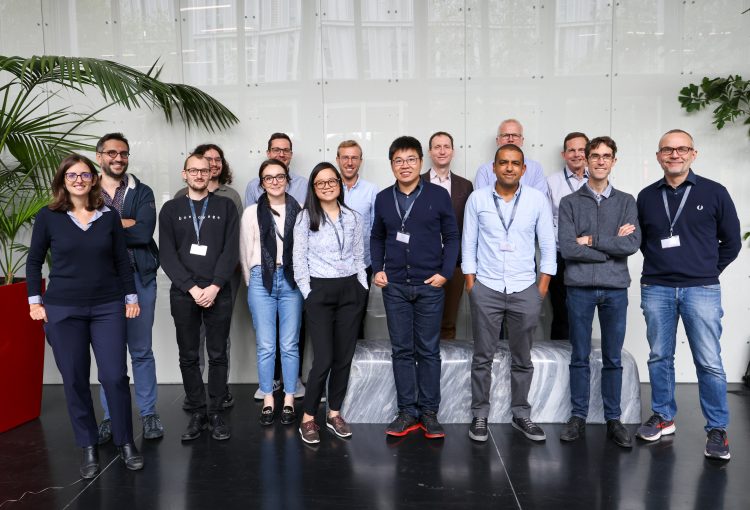
Sara Signorelli, Laurent Davezies, Clemens Mueller, Pedro Vergara Merino, Alice Lapeyre, Bernhard Schmidpeter, Alice Zulkarnain, Nicholas Swanson, Weilon Zhang, Roland Rathelot, Isaiah Andrews, Arne Uhlendorff, Jeffrey Grogger, Xavier D’Haultfoeuille, Marco Caliendo
The 5th IZA/CREST conference on Evaluation of Labor Policies was held at ENSAE on October 19 and 20 2023. It brought together international experts in the fields of labor economics and econometrics. Each participant gave a 45 minute talk and the range of topics that were covered was broad, ranging from applied policy evaluations to econometric approaches to measure causal effects. The keynote was delivered by Isaiah Andrews on Causal Interpretation of Causal IV Estimands.
The program of the conference can be found here: https://conference.iza.org/conference_files/EVAL_2023/program
“Black-Scholes: the formula at the origin of Wall Street”

An article by Peter Tankov in Polytechnique Insights – September 6th, 2023
Politique fiscale optimale et faisabilité politique
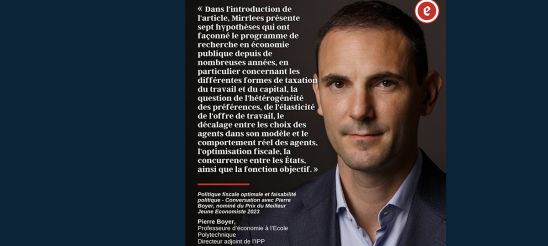
Interview de Pierre Boyer, nominé au prix du Meilleur Jeune Economiste français 2023, par Pierre Rousseaux, pour le journal Oeconomicus.
18 octobre 2023
2023 ENSAE-ENSAI Days
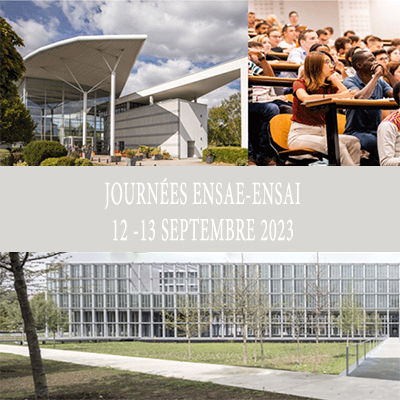
On September 12 and 13, statisticians from both campuses of CREST (Bruz, ENSAI and Palaiseau, ENSAE) as well as statisticians from INSEE gathered for the Statistical workshop ENSAE-ENSAI at Palaiseau to present their current work. The event was organized by Victor-Emmanuel Brunel, Professor in Statistics ENSAE/CREST and Adrien Saumard, Associate Professor in Statistics ENSAI/CREST.
The primary objective of these meetings between statisticians from ENSAE and ENSAI, as well as statisticians from INSEE, is to enhance exchanges and foster collaborations between the two CREST campuses and INSEE. The event featured participants delivering 30-minute presentations.
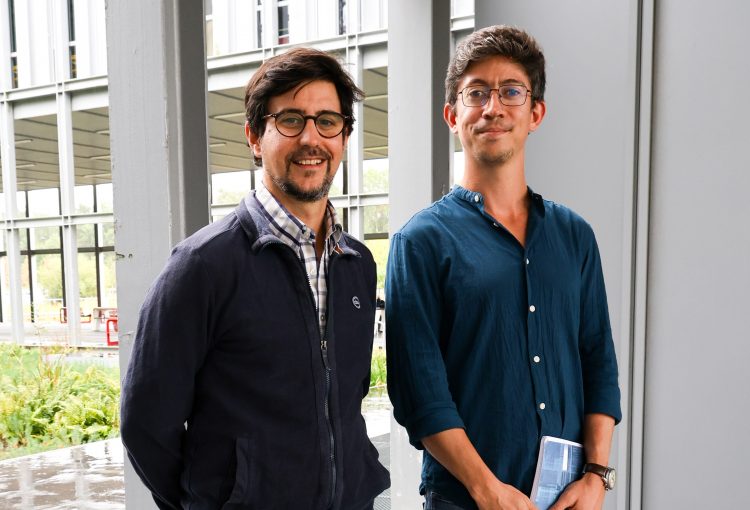
Statistical insights from the CREST workshop
On the first day of the workshop, a diverse range of topics in statistics was explored through a series of presentations. Researchers delved into intriguing subjects such as preemption and learning in stochastic scheduling, determinantal sampling designs, and the theoretical perspective and practical solutions related to kernel Stein discrepancy thinning. The day also featured discussions on dynamic modeling of abundance data in ecology, non-parametric intensity estimation of spatial point processes employing random forests, and the complexities of repeated bidding with dynamic value. Additionally, topics like adaptive functional principal components analysis, learning patterns within multivariate functional data, and the concentration of empirical barycenters in non-positively curved metric spaces contributed to a rich and stimulating day of statistical exploration and research.
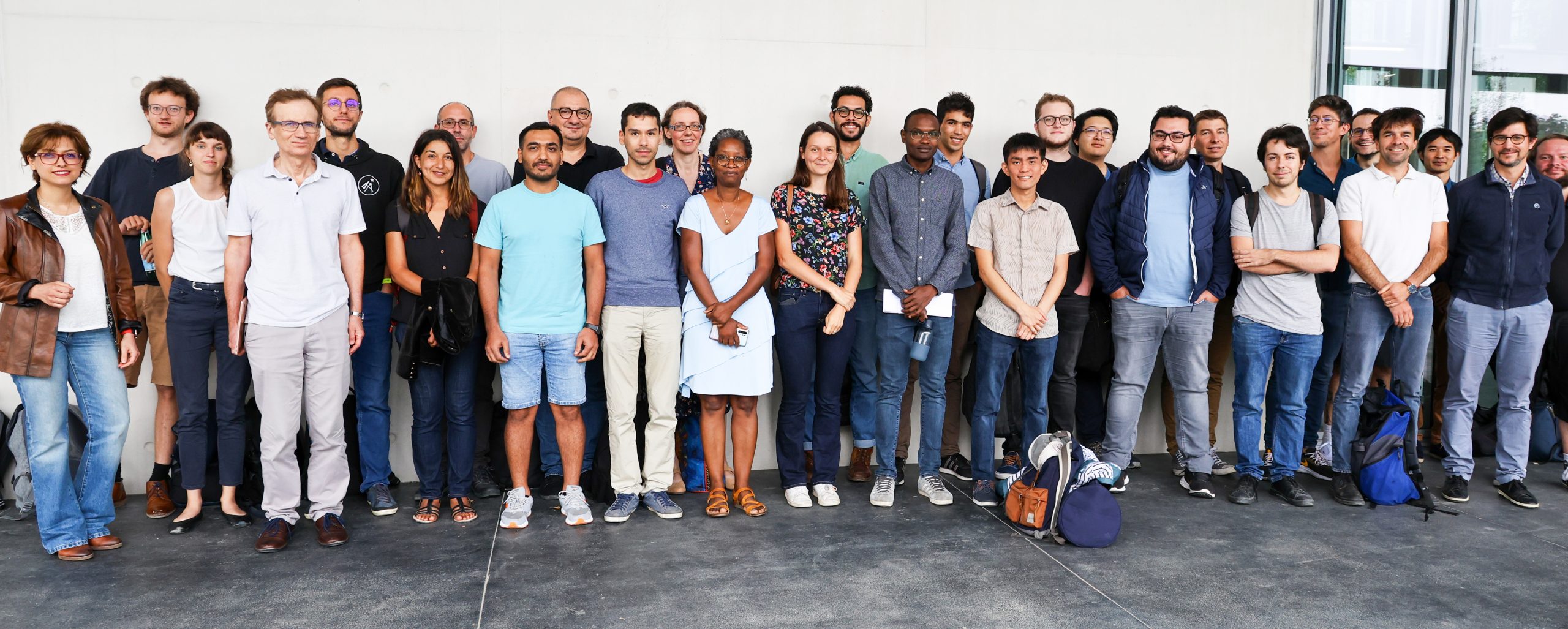
The second day of the workshop continued to offer a diverse array of statistical topics and insights. Researchers engaged in discussions about scalable and hyper-parameter-free covariate shift adaptation through a conditional sampling approach, contributing to the field’s adaptability and scalability. Another session explored risk-aware bandits with implications for improving crop management practices, bridging statistical methods with real-world applications. The day also delved into “Topics on methodology for official statistics,” providing valuable insights into the methodological considerations for producing authoritative statistical information. In addition, there were discussions on “Learning the smoothness of weakly dependent functional time series,” a crucial topic in understanding data patterns. Lastly, the finite-sample performance of the maximum likelihood estimator in logistic regression was explored, shedding light on the practical applications of statistical techniques in this context. The second day continued to enrich the workshop with a broad spectrum of statistical research and its real-world implications.
CREST: a collaboration between Bruz (ENSAI) and Palaiseau (ENSAE Paris) campuses
The recent statistics workshop held at ENSAE Paris exemplified the collaborative spirit between our campuses in Bruz at ENSAI and Palaiseau. This event provided researchers from both locations with a unique opportunity to connect, share ideas, and contribute to the advancement of statistical research. It underscored the enduring commitment to knowledge exchange and academic synergy that characterizes the partnership between our two campuses.
« La France est dans une situation inflammable »

Une interview de l’économiste Pierre Boyer par Grégoire Normand pour le journal La Tribune – 13 Oct 2023
Blockchain@X-OMI Workshop on Blockchain and Decentralized Finance

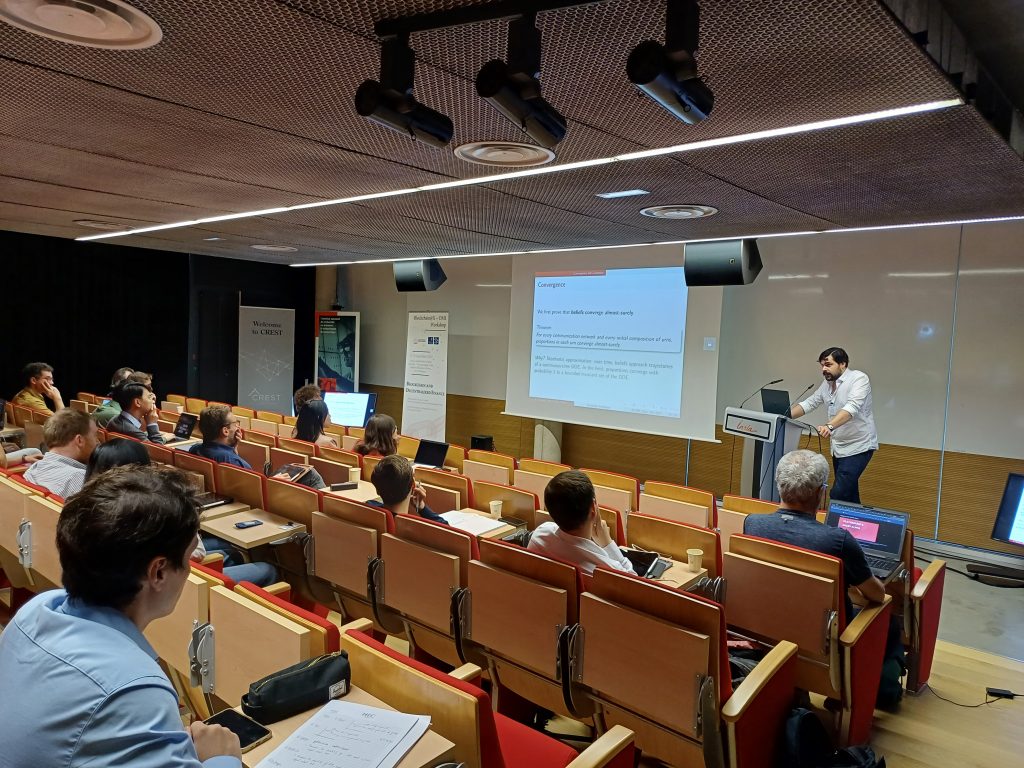
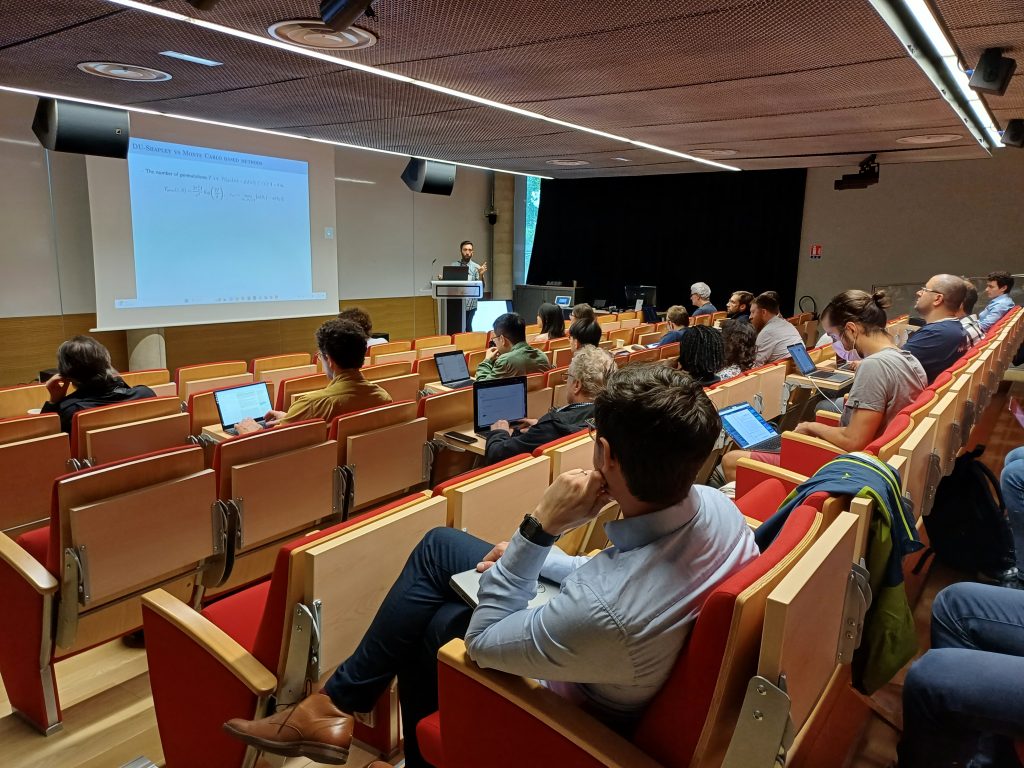
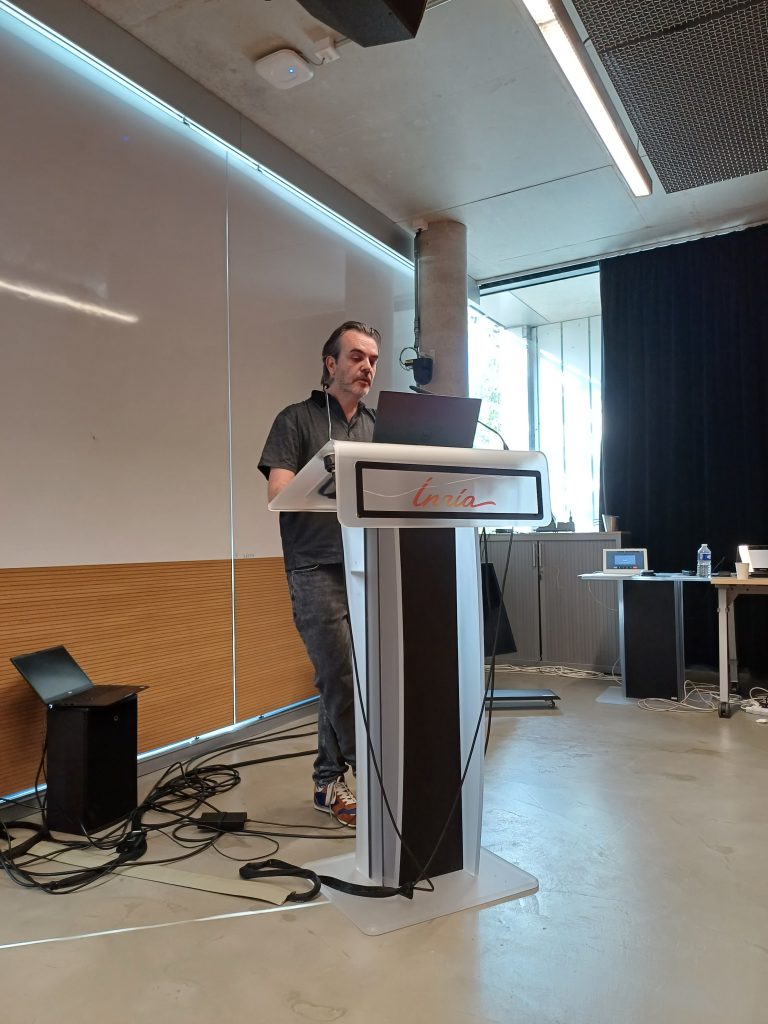
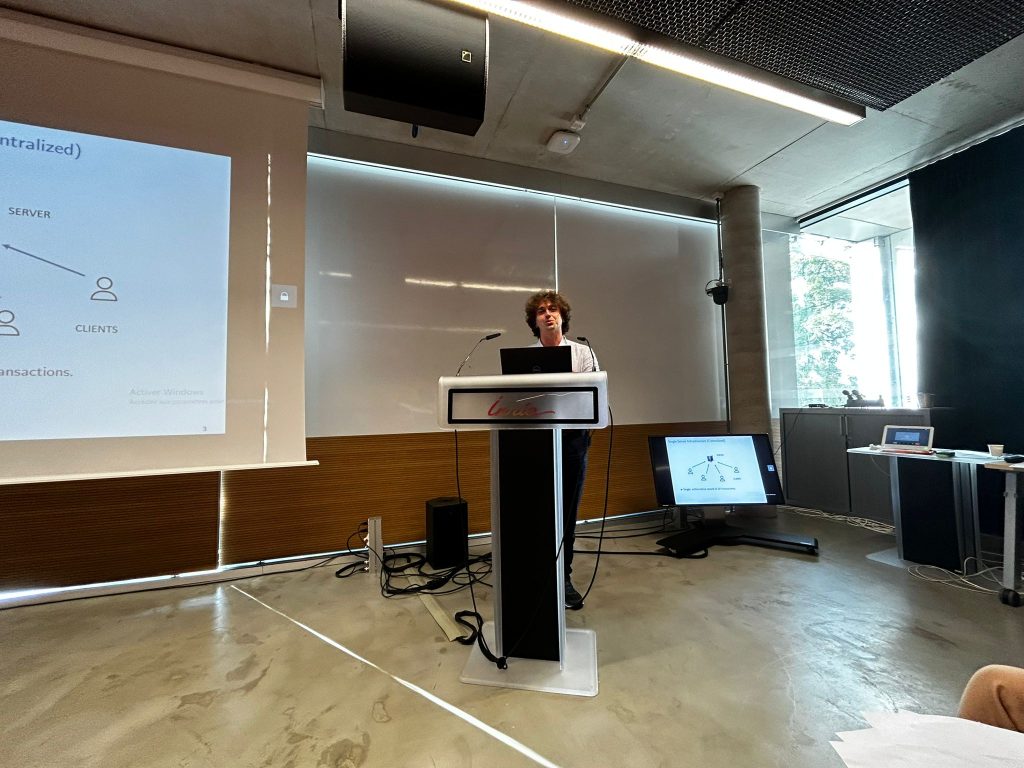
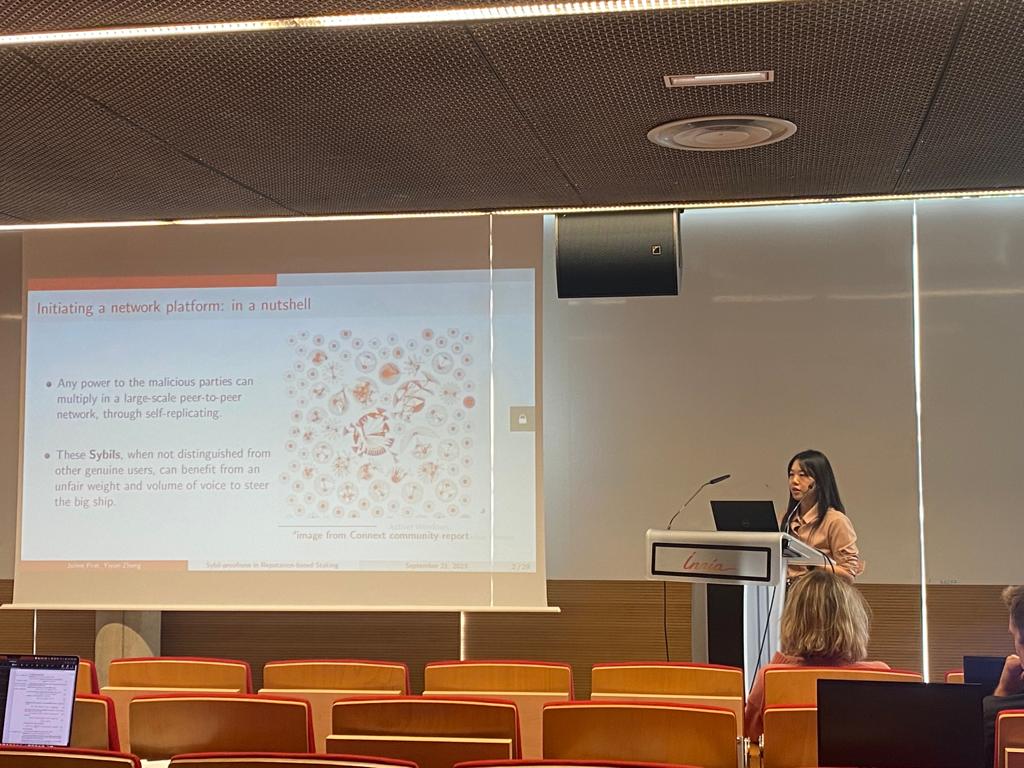
The Blockchain@X-OMI Workshop on Blockchain and Decentralized Finance (DeFi) was held on September 21-22 2023 at the Alan Turing building at INRIA on the École Polytechnique campus.
A gathering of multidisciplinary minds
The workshop brought together 22 scholars from a variety of backgrounds, such as economics, computer science, and mathematics, who presented their working papers. The academic presentations were complemented by three industrial talks delivered by blockchain innovators of the private sector.
The workshop highlighted the importance of a multidisciplinary approach to its central topic: As experts from various fields discussed similar issues but from different angles, the combination of their insights improved everyone’s understanding. From the talks of blockchain innovators such as Kamea Labs, StarkWare, and Giza, the workshop also made evident that blockchain and DeFi research has a large potential for experimentation in the private sector.
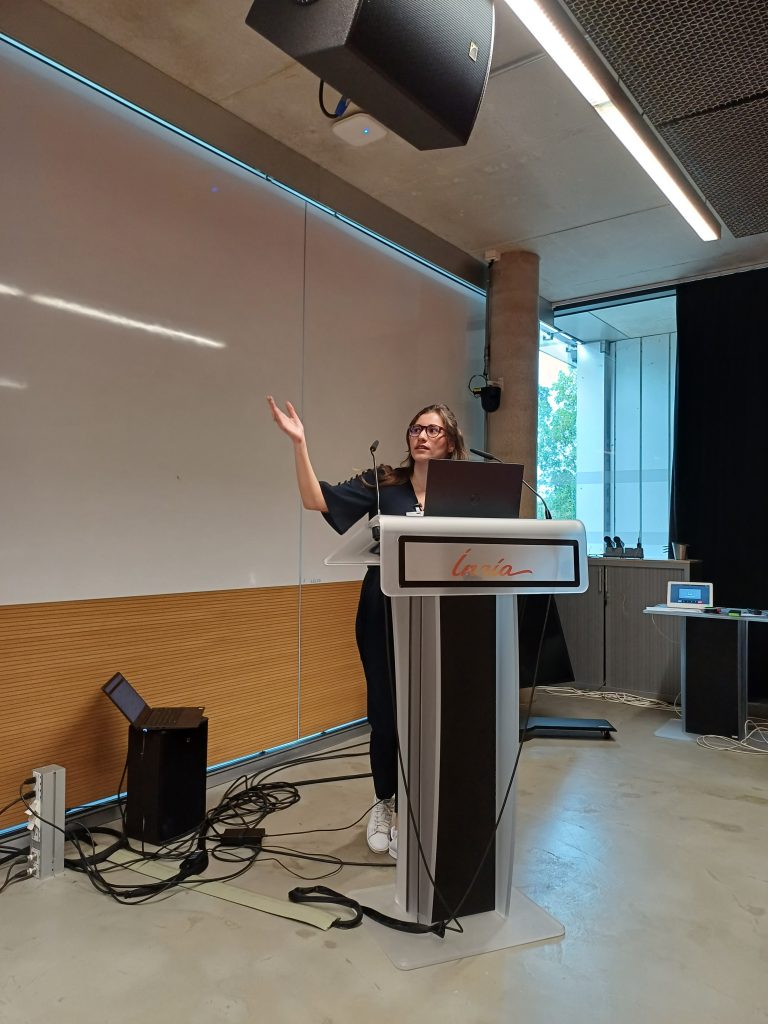
Towards a better understanding of blockchain and decentralized finance ecosystems
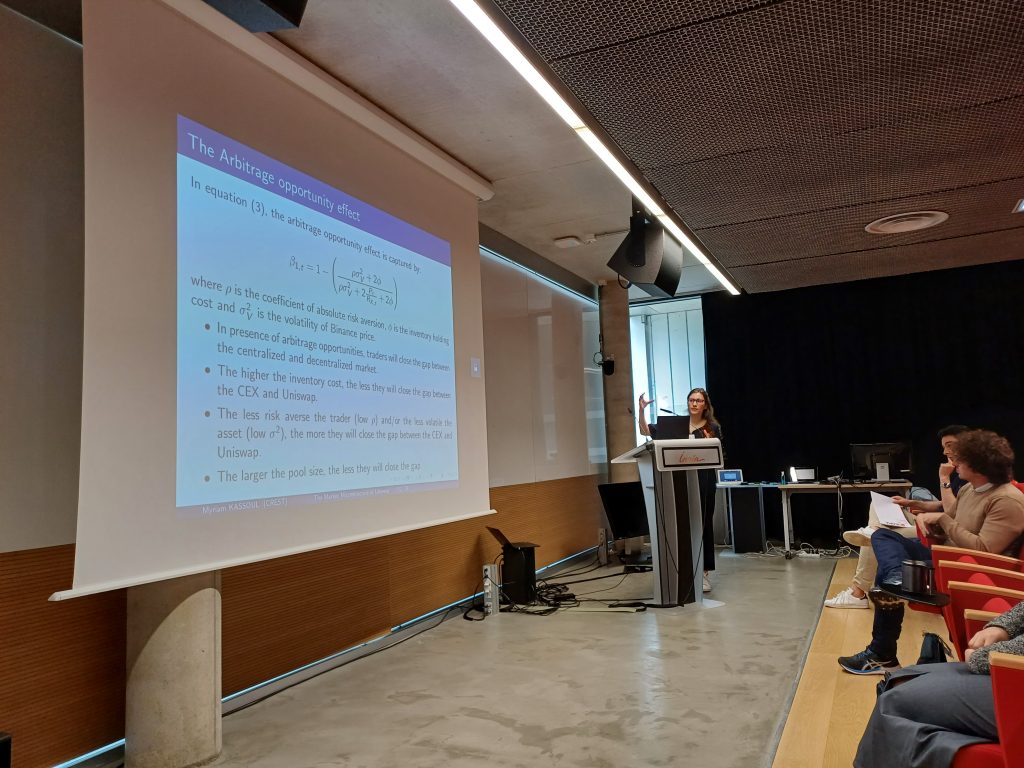
The presentations were sectioned into six sessions with strong interlinks to the central theme of blockchain and decentralized finance (DeFi). On the first day, the workshop dived into topics concerning distributed consensus and the game theory of information aggregation in distributed systems. The successive session, on the financial analysis of Automated Market Makers (AMMs), received valuable discussions on how to employ stochastic optimal control tools to devise trading, liquidity provision, and risk prediction strategies in a Constant Product Market Maker (CPMM). The afternoon’s presentations shifted the focus towards the network security of DeFi protocols. Presenters identified existing attacks that weaken governance in DeFi ecosystems and devised machine learning and artificial intelligence solutions to mitigate them.
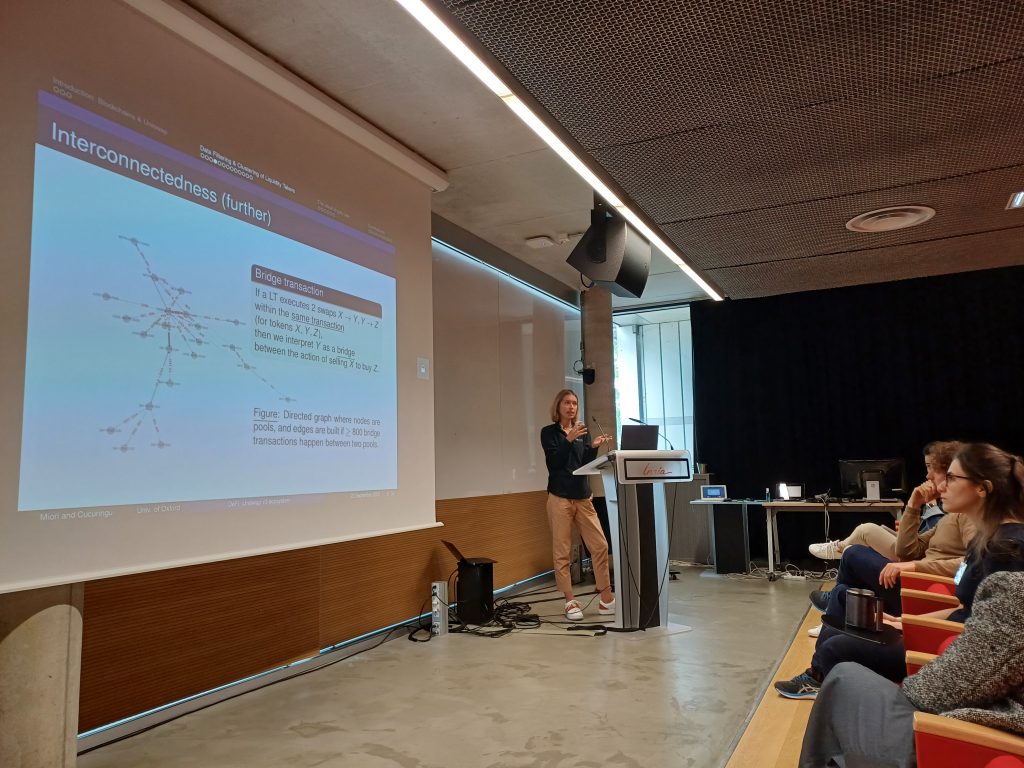
The second day started with an empirical network analysis of Decentralized Finance (DeFi) protocols. One presenter graphically analysed DeFi marketplaces to explain trading behaviours. Another presenter with a Physics background assessed the health of these new markets using an interesting analogy the ideal thermal law. In the afternoon, the workshop delved into AMM design, featuring six papers that pointed out the exploitable vulnerabilities of AMMs to liquidity providers in the face of swap fees and adversarial liquidation. Some papers shed light on alternative trading protocols by introducing external pricing oracles, looking beyond the CFMM formula, and using batch trading. The topic shifted more to the AMM ecosystem improvements, mixed with also a historical look into the distributed system refinements that moulded blockchains today.
The first event co-organized by Blockchain@X Research Centre (École Polytechnique) and Oxford-Man Institute of Quantitative Finance (University of Oxford)

Blockchain@X Research Centre and Oxford-Man Institute of Quantitative Finance crossed paths in examining the financial market structure unprecedentedly facilitated by blockchain technologies. The Blockchain@X chair is directed by Professor Julien Prat (CNRS & CREST, École Polytechnique, IP Paris) and Professor Daniel Augot (Inria Saclay & École Polytechnique, IP Paris). The chair bridges economics and computer science to broadly identify challenges in the blockchain today. This diversity of its researchers’ expertise was reflected in the presentations given by the team, ranging from mechanism design and macro-foundations of utility tokens, to econometric and graph data-driven analysis of DeFi protocols.
Carrying a similar vision, at the Oxford-Man Institute (OMI), led by Professor Álvaro Cartea (University of Oxford), has the mission of addressing fundamental problems in quantitative finance. In particular, the participating speakers covered DeFi topics with a strong focus on the ecosystems of liquidity pools and financial decision-making in these new trading venues.

The Blockchain@X-OMI collaboration aimed at attracting academics and industrial partners to advance this emerging field of blockchain through research and application in Europe. Blockchain is a fast-evolving industry that has been absorbing endeavours from various studies that continuously inspect and propose implementations for improving performances. To synchronise the outputs from the university labs and the industry, this workshop served as an exchange channel to broadcast peoples’ work and incubate future collaborations.
Économie du développement et démographie

“Économie du développement et démographie : les cas extrêmes de l’Afrique et de la Chine”: Une interview de Pauline Rossi par Pierre Rousseaux pour le journal Oeconomicus – 4 octobre 2023
RAPPORTS IPP n° 46 & 47

“Nouvelle évaluation des réformes de la fiscalité du capital” par Clément MALGOUYRES, Laurent BACH, Antoine BOZIO et Arthur GUILLOUZOUIC: Trois ans après ses premiers travaux, l’IPP publie mardi 17 octobre deux nouvelles évaluations des réformes de 2017 ayant conduit à la mise en place du prélèvement forfaitaire unique (PFU), au remplacement de l’impôt de solidarité sur la fortune (ISF) par l’impôt sur la fortune immobilière (IFI) et à la baisse de l’impôt sur les sociétés – Octobre 2023
Inequalities in digital earning

“Voices from Online Labour: Inequalities in digital earning activities across countries”: A post by Paola Tubaro published on her blog Data Big and Small – 03/09/2023