
Une interview de Paola Tubaro pour le journal Estonian Public Broadcasting à Tallinn.
Quand la course à une meilleure IA éclipse les travailleurs précaires

Une interview de Paola Tubaro pour le journal Estonian Public Broadcasting à Tallinn.
E. Macron : comment reprendre la main ?
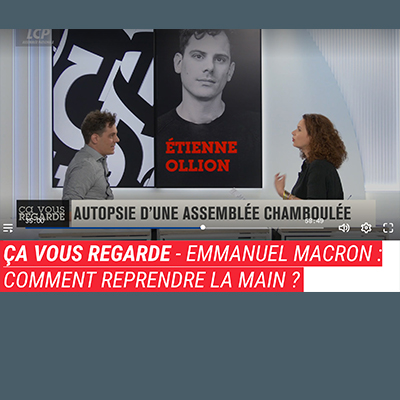
Sur LCP, le sociologue Étienne Ollion était l’invité “Grand témoin” de l’émission “Ça vous regarde”.
CREST, a multidisciplinary laboratory

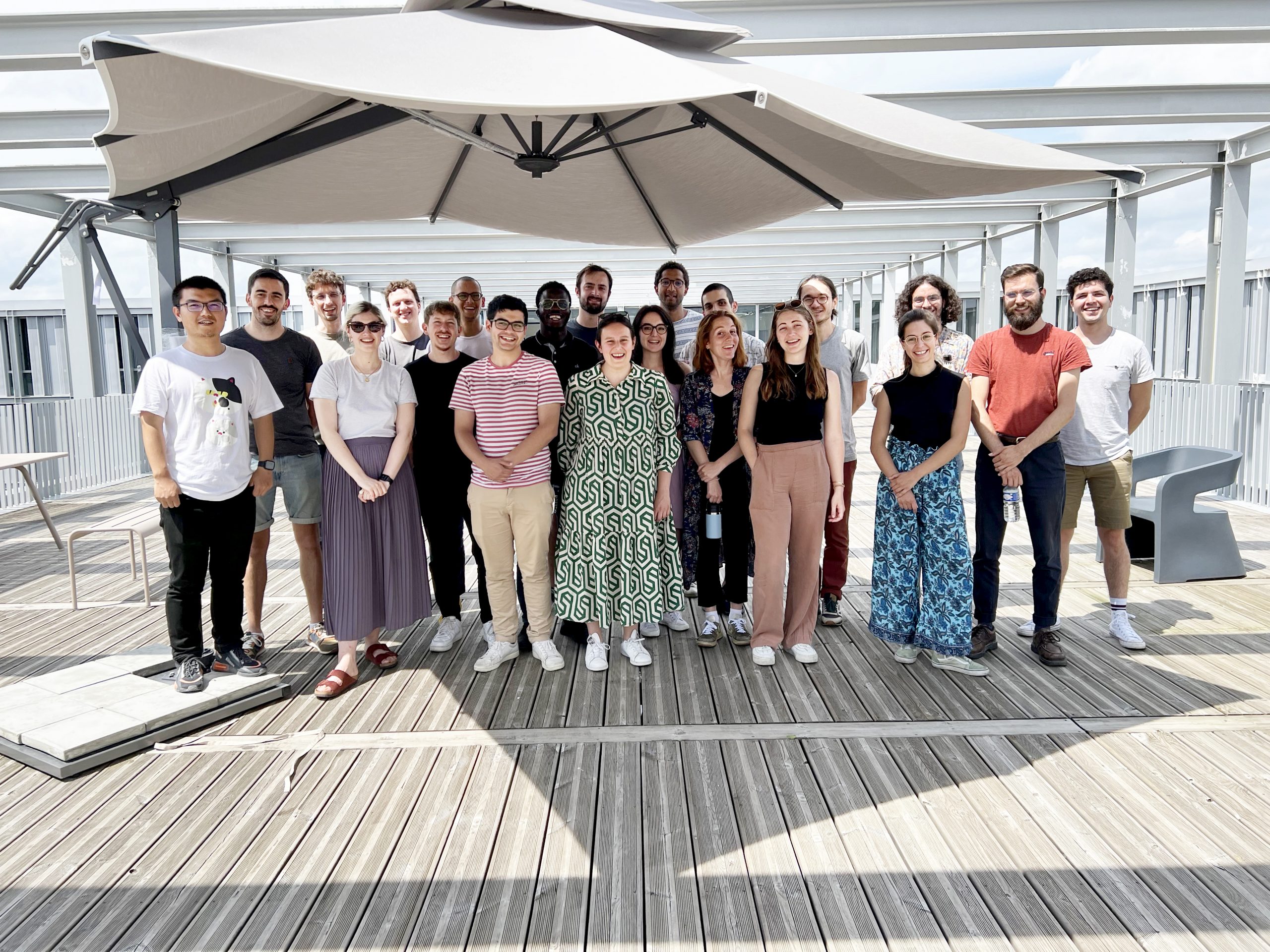
On June 19, 2023, CREST organized a day dedicated to doctoral students was held.
At this event, doctoral students from the 4 research divisions (economics, sociology, finance-insurance and statistics) were able to exchange ideas with their colleagues and present their areas of research.
Multidisciplinarity…
CREST favors an interdisciplinary approach to tackling complex issues. This synergy between different areas of expertise enriches research and provides innovative perspectives in a variety of fields such as the sociology of work, public economics, green finance, political economy, statistical analysis of networks and many others.
Thanks to this multidisciplinary approach, the CREST laboratory fosters fruitful collaborations between researchers from different backgrounds, encouraging the emergence of innovative solutions to contemporary societal challenges.
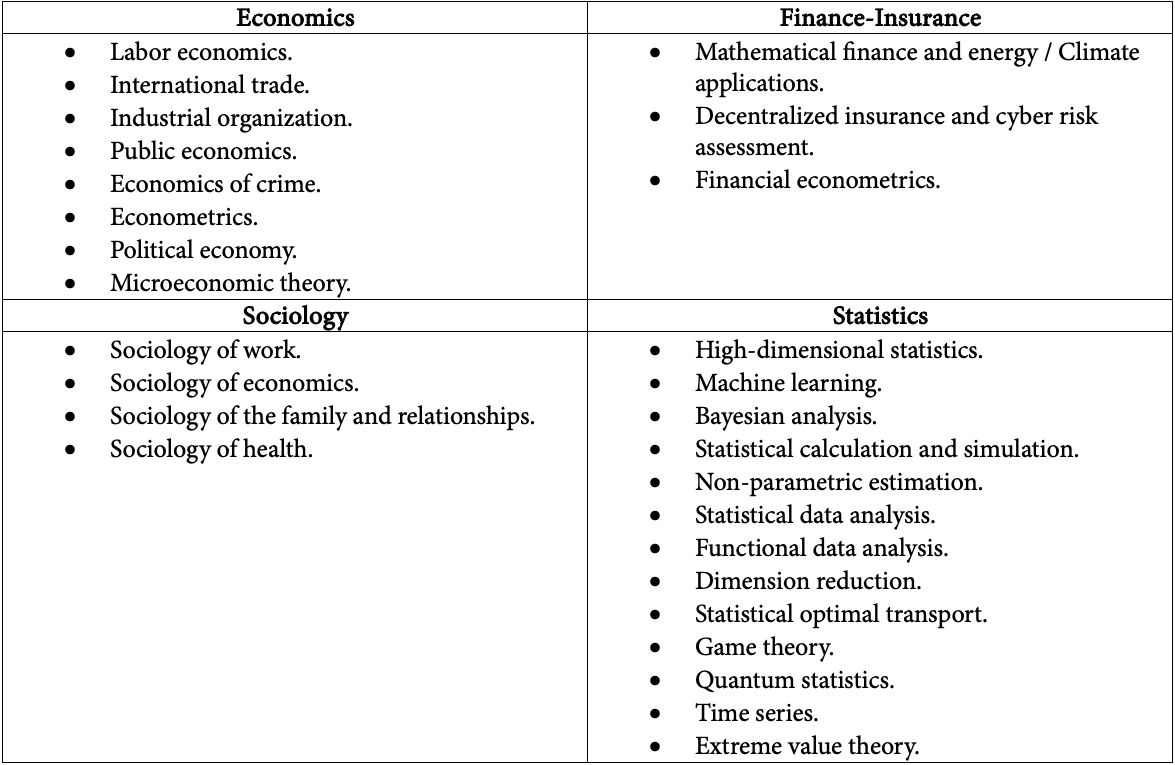
Fields of research by division
… At all levels
CREST maintains a wide range of academic and industrial partnerships beyond its core themes. These enriching interdisciplinary collaborations help to provide innovative solutions and tackle complex challenges in a wide range of sectors. CREST works with financial institutions (Caisse des dépôts et consignation, La Banque Postale Asset Management, HSBC AM) and public institutions (Ile de France region) to examine the determinants and impacts of integrating environmental, social and governance issues into investment decisions or to assess their climate and sustainable finance action plans (City of Paris, Ile de France region).
These interdisciplinary partnerships demonstrate CREST’s commitment to tackling contemporary challenges by mobilizing a wide range of knowledge and expertise.
Doctoral studies at CREST
Working in the CREST laboratory, doctoral students benefit from a stimulating environment, conducive to the exchange ideas and collaboration with researchers from a variety of backgrounds. This diversity of approaches fosters the acquisition of cross-disciplinary skills and enables doctoral students to develop a holistic vision of their field of study, strengthening their ability to conduct innovative research and meet the challenges of tomorrow.
CREST, a multidisciplinary laboratory
On June 19, 2023, CREST organized a day dedicated to doctoral students was held.
At this event, doctoral students from the 4 research divisions (economics, sociology, finance-insurance and statistics) were able to exchange ideas with their colleagues and present their areas of research.
Multidisciplinarity…
CREST favors an interdisciplinary approach to tackling complex issues. This synergy between different areas of expertise enriches research and provides innovative perspectives in a variety of fields such as the sociology of work, public economics, green finance, political economy, statistical analysis of networks and many others.
Thanks to this multidisciplinary approach, the CREST laboratory fosters fruitful collaborations between researchers from different backgrounds, encouraging the emergence of innovative solutions to contemporary societal challenges
Fields of research by division
… At all levels
CREST maintains a wide range of academic and industrial partnerships beyond its core themes. These enriching interdisciplinary collaborations help to provide innovative solutions and tackle complex challenges in a wide range of sectors. CREST works with financial institutions (Caisse des dépôts et consignation, La Banque Postale Asset Management, HSBC AM) and public institutions (Ile de France region) to examine the determinants and impacts of integrating environmental, social and governance issues into investment decisions or to assess their climate and sustainable finance action plans (City of Paris, Ile de France region).
These interdisciplinary partnerships demonstrate CREST’s commitment to tackling contemporary challenges by mobilizing a wide range of knowledge and expertise.
Doctoral studies at CREST
Working in the CREST laboratory, doctoral students benefit from a stimulating environment, conducive to the exchange ideas and collaboration with researchers from a variety of backgrounds. This diversity of approaches fosters the acquisition of cross-disciplinary skills and enables doctoral students to develop a holistic vision of their field of study, strengthening their ability to conduct innovative research and meet the challenges of tomorrow.
Dossier : Intelligence artificielle, de la fascination à l’inquiétude

Dans ce dossier, le journal Libération s’est intéressé aux recherches du DiPLab et a interviewé quelques uns de ses chercheurs, dont Paola Tubaro qui analyse ici la question des travailleurs de l’ombre de l’IA au Vénézuela et en Inde.

«Libération» Numéro spécial entièrement consacré aux IA _ Mardi 20 juin 23
Madagascar, Kenya, Inde… Où sont les travailleurs de l’ombre de l’IA ?
Cartographie mondiale des travailleurs à bas coût nécessaires à l’IA.
Une course folle, qui a pris sa source dans la Silicone Valley, est lancée et s’attache à conquérir de nombreux domaines, tels la science, la médecine, l’armée mais aussi des domaines moins attendus tels la littérature ou l’art…
L’IA fascine, elle est au cœur des préoccupations des plus grandes puissances économiques.
Virtuelle et basée sur des centaines de milliards de datas et d’algorithmes, il est difficile d’imaginer que cette gigantesque vague virtuelle a besoin de milliers de petites mains à travers le monde pour parfaire son bon fonctionnement.
Paola Tubaro
Paola Tubaro, membre du CREST et chercheuse au CNRS, est une sociologue économique qui utilise l’analyse des réseaux sociaux pour mettre en lumière les transformations contemporaines des marchés et des organisations. Ses recherches actuelles portent sur l’économie des plateformes numériques, les réseaux de production mondiaux de l’industrie de l’intelligence artificielle, le rôle du travail humain dans le développement de l’automatisation et les inégalités numériques.
Elle s’intéresse également à l’éthique des données et de l’intelligence artificielle.
Elle donne des cours sur la science des réseaux, l’éthique des données et la science responsable, ainsi que sur la conception de la recherche.
Le DiPLab (Digital Platform Labor)
Digital Platform Labor est un groupe de recherche interdisciplinaire. Les parcours de ses membres recoupent plusieurs domaines et disciplines universitaires tels que la sociologie, l’économie, l’informatique, la linguistique, le droit, la philosophie et l’anthropologie. Le DiPLab mène des projets de recherche fondamentale financés par des fonds publics en Europe, en Afrique et en Amérique latine.
Le groupe de recherche se réunit deux fois par mois pour son séminaire du mercredi. D’autres événements, tels que des séminaires, des ateliers et des conférences, sont organisés par les membres du DiPLab. En particulier, les membres du DiPLab ont cofondé et gèrent activement le Réseau européen sur le travail numérique (ENDL) et sa branche internationale INDL.
Le groupe publie régulièrement des articles dans des revues à comité de lecture. La production scientifique des membres du DiPLab comprend également des rapports politiques, des reportages et des documentaires destinés à sensibiliser le public à l’avenir du travail et des technologies.
Report : “Who trains the data for Artificial Intelligence in Brazil?”
A joint report DiPLab/LATRAPS on micro-work (19 June 2023) co-written by:
Matheus Viana Braz
Assistant Professor in the Department of Psychology at the Minas Gerais State University (UEMG), Brazil, and a Professor for the Graduate Program in Psychology at the Maringá State University (UEM). Coordinates the LATRAPS.
Paola Tubaro
Research professor (Directrice de Recherche) in sociology and technology at the National Centre for Scientific Research (CNRS) and member of Center for Research in Economics and Statistics (CREST) in France.
Antonio A. Casilli
Professor of Sociology at the Polytechnic Institute of Paris – Telecom Paris. Co-director of DiPLab (Digital Platform Labor) and co-founder of the International Network on Digital Labor (INDL).
Microwork in Brazil : Who are the workers behind artificial intelligence? which sheds light on the burgeoning landscape of remote, data-centered platform labor in the country.
https://diplab.eu/who-trains-the-data-for-artificial-intelligence-in-brazil-a-joint-report-diplab-latraps-on-micro-work-june-2023/
This comprehensive study is the result of a collaborative effort between the research center LATRAPS (Laboratório de Trabalho, Saúde e Processos de Subjetivação, Minas Gerais State University, Brazil), coordinated by Matheus Viana Braz, and the research program DiPLab (Digital Platform Labor, Polytechnic Institute of Paris, France), co-founded by Paola Tubaro and Antonio A. Casilli. This study draws on methods and results developed in various projects conducted between 2018 and 2023 in Europe and Latin America.
Articles publiés dans la presse hispanophone:
“Trabajos repetitivos y mal pagados, la otra cara del avance de la Inteligencia Artificial” Jueves 08 de Junio de 2023 – 08:01
https://www.eleconomista.com.mx/amp/capitalhumano/Trabajos-repetitivos-y-mal-pagados-la-otra-cara-del-avance-de-la-Inteligencia-Artificial-20230607-0097.html
“Revolta, impotência, tristeza : Brasileiros ganham frações de centavos para melhorar sua inteligência artificial” 19 de jun de 2023, 08h45
https://www.intercept.com.br/2023/06/19/brasileiros-ganham-fracoes-de-centavos-para-melhorar-sua-inteligencia-artificial/
“Doux comme un algo” – Épisode 10 – 14 mai 2023

Interviewé par Sophian Fanen, le sociologue Samuel Coavoux décrypte nos pratiques musicales liées aux playlists et aux algorithmes pour le média indépendant “Les Jours”
Rapport Pisani-Ferry: “La conversion écologique des Français” est cité dans le Rapport thématique-Enjeux distributifs
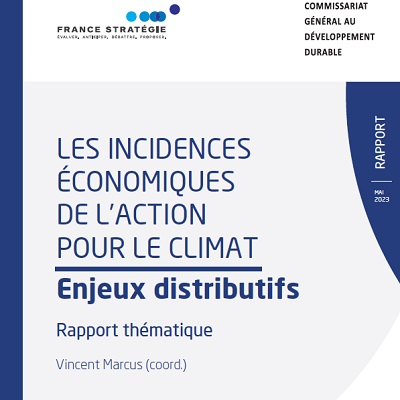
“La conversion écologique des Français” co-écrit par I. Petev, P. Coulangeon, Y. Demoli, M. Ginsburger, édité aux éditions PUF est cité, p42.43, dans le Rapport thématique-Enjeux distributif.
“La conversion écologique des Français” cité dans le Rapport Pisani-Ferry
“La conversion écologique des Français” co-écrit par I. Petev, P. Coulangeon, Y. Demoli, M. Ginsburger, édité aux éditions PUF est cité, p42.43, dans le Rapport thématique-Enjeux distributif.
À l’étude dans le journal Le Monde, le livre de Chris Bail préfacé par Etienne Ollion
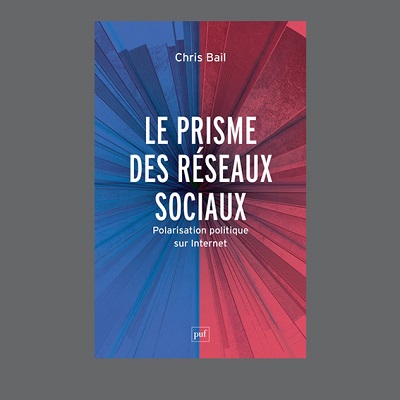
Dans son article, Marc-Olivier Bherer analyse l’ouvrage « Le prisme des réseaux sociaux: La polarisation politique sur Internet » édité aux PUF.