
Intervention de Pierre Boyer dans une vidéo de Brut Media sur Twitter – 14/04/2021 – 3 min
Spillovers in Childbearing Decisions and Fertility Transitions: Evidence from China

Online article of Pauline Rossi and Yun Xiao in VoxChina – March 24, 2021
Chaînes de valeur mondiales : le passé, la Covid et l’avenir
Article d’Isabelle Méjean dans La Lettre de l’InSHS n°70, page 23 – Mars 2021
Le retour de la lutte contre les sectes
Podcast d’Etienne Ollion sur Europe 1 – 27/02/2021 – 42 mn
Laplace’s Demon: A Seminar Series
Online seminars with Nicolas Chopin on CRITEO – March 17 and 24, 2021 – 1 hr
La blockchain importe plus que le Bitcoin
Interview de Julien Prat sur le Bitcoin – 23/02/2021
Covid-19 : une mortalité plus élevée
Article de Nicolas Chopin dans Polytechnique Insights – 25/01/2021
Milton Friedman, La liberté à tout prix
Podcast de Béatrice Cherrier sur France Culture – 19/01/2021 – 58 mn
How to anticipate the impact of a massive cyber attack?

Research Brief of Caroline Hillairet in Economy and Sociology – December 2020
Les effets macroéconomiques des politiques de confinement
Les podcasts du Crest : Stéphane Auray – Novembre 2020 – 19 mn
The macroeconomic effects of lockdown policies in Journal of Public Economics
Stéphane Auray, CREST-Ensai and ULCO, France, Aurélien Eyquem, Univ Lyon, Université Lumière Lyon 2, Institut Universitaire de France
A b s t r a c t
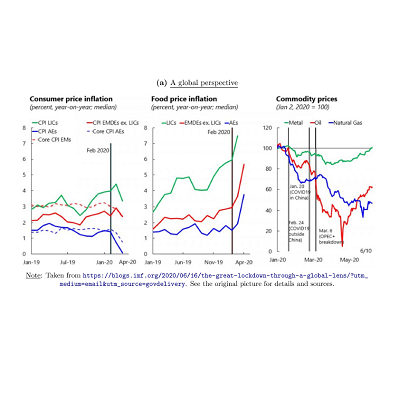
A tractable incomplete-marketmodel with endogenous unemployment risk, sticky prices, real wage rigidity and a fiscal side is calibrated to Euro Area countries and used to analyze the macroeconomic effects of lockdown policies. Modeling them as a shock to the extensive margin of labor adjustment – a rise in separations – produces large and persistent negative effects on output, unemployment and welfare, raises precautionary savings and lowers inflation, in line with early evidence about inflation dynamics. Modeling lockdowns as a shock to the intensive margin – a fall in labor utilization – produces small and short-lived macroeconomic and welfare effects, and implies a counterfactual rise in inflation. Conditional on a lockdown(separation) shock, raising public spending or extending UI benefits by large amounts is much more effective in stimulating the economy than during normal times. Quantitatively however, the ability of such policies to flatten the output and unemployment curves remains limited, even though these policies can alleviate a reasonable share of the aggregate welfare losses from the lockdown.
© 2020 Elsevier B.V. All rights reserved.
Lien vers l’article source : https://www.sciencedirect.com/science/article/abs/pii/S0047272720301249