

VoxEU Talk – An interview with Benoît Schmutz-Bloch “How protests are born, and how they die”

27 Septembre 2024
Une tribune d’Ivaylo Petev pour Polytechnique insights

2 Octobre 2024
FairOnChain Consortium Meets at École polytechnique

On September 26, 2024, Blockchain@X Research Center, part of CREST, hosted the second in-person FairOnChain consortium meeting at the Alan Turing Building at INRIA on the École polytechnique campus.
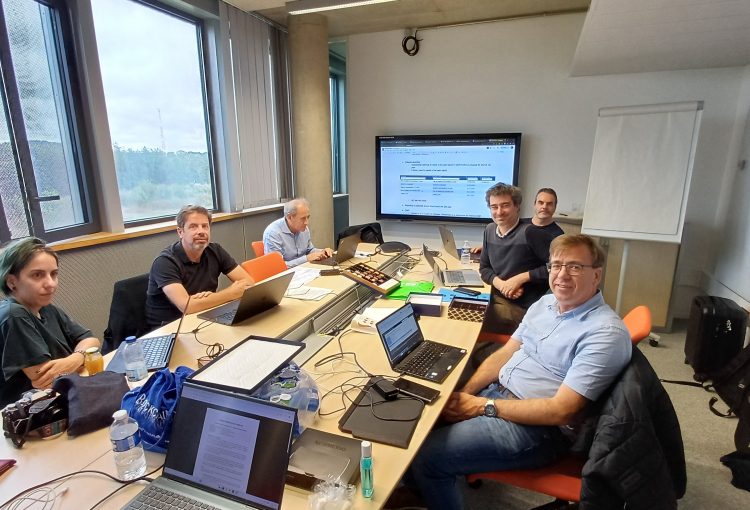
The meeting brought together the principal investigators (PIs) and researchers involved in the FairOnChain project, an initiative focused on developing a fair and modular blockchain data infrastructure for open science and society. Participants included:
- Prof. Julien Prat, CREST, École polytechnique
- Prof. Marco Mattavelli, École Polytechnique Fédérale de Lausanne
- Prof. Arnaud Gaudinat, Haute École de Gestion de Genève
- Prof. William Knottenbelt, Imperial College London
- Christophe Lebrun, Haute École de Gestion de Genève
- Madalina Sas, Imperial College London
- Natkamon Tovanich, CREST, École polytechnique
During the meeting, the team updated the progress of ongoing work and detailed the planning for the next phase of the project. This included developments of a unified blockchain data structure and publicly accessible blockchain datasets aimed at enhancing data access, transparency, and reproducibility in blockchain research.
The team also discussed the technical work required to achieve the project goals and plans for the internal report submission to CHIST-ERA. Furthermore, they explored the possibility of upcoming publications resulting from the research within the consortium.
The meeting strengthened collaboration within this international team. Future meetings are planned for Lausanne, Switzerland, around January 2025, followed by a gathering in London, United Kingdom, in June 2025.
About FairOnChain Project

The FairOnChain Project is a pioneering European research collaboration funded by the CHIST-ERA call for Open and Reusable Research Data and Software (ORD). Running from 2023 to 2025, this two-year initiative aims to overcome the technical barriers to accessing and analyzing blockchain data, promoting enhanced transparency and reproducibility in blockchain research.
As part of this project, the FairOnChain team will contribute to the scientific community with:
- Publicly Accessible and Expandable Datasets: These will include structured, daily updated blockchain transaction data. Researchers can access raw blockchain transactions alongside enriched, community-maintained datasets in a uniform, open format, ensuring greater availability and reuse of this complex data.
- Open-Source Software Framework and Standardized APIs: This project aims to deliver a unified framework for researchers to query, annotate, and reference blockchain data effectively. Additionally, it will support the development of well-described, reusable workflows and pipelines to facilitate the exchange and replication of scientific results in line with the FAIR principles (fundability, accessibility, interoperability, and reusability) of open science.
By developing modular and scalable data infrastructure, FairOnChain aims to facilitate easier, open access to blockchain datasets, enabling researchers and society to benefit from trustworthy and reusable data for scientific discovery.
The consortium behind FairOnChain includes leading research institutions from France (École polytechnique, Institut Polytechnique de Paris), Switzerland (Haute École de Gestion de Genève, HES-SO and École Polytechnique Fédérale de Lausanne) and the United Kingdom (Imperial College London).
Each institution has received grants from its respective national research agencies to support this collaborative research project.
Pourquoi les économistes se trompent-ils (quasiment) tout le temps ?
Interview de Béatrice Cherrier pour Les Echos (23.09/2024)
Lancement de la Chaire Impact Investing

Federica Meluzzi, winner of the 2024 EALE Young Labor Economist Prize
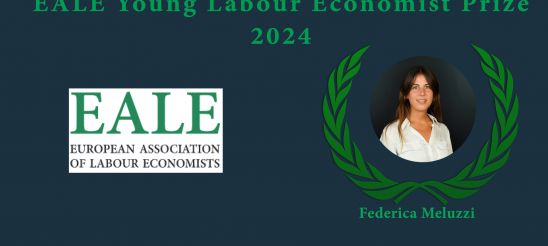
CREST is proud to announce that Federica Meluzzi, a PhD candidate in Economics at CREST-GENES, has been awarded the 2024 EALE Young Labor Economist Prize.
Federica Meluzzi, PhD candidate at CREST specialized in labor economics.

Federica’s work is in labor economics at the intersection with public economics and education. Specifically, her research is on gender differences in the labor market, with a focus on how gender norms are transformed, either by public policies or with the social environment.
Federica will be going on the academic job market 2024 – 2025.
The European Association of Labor Economists and the EALE Young Labor Economist Prize.
The European Association of Labor Economists (EALE) was founded in 1989 in order to promote the advancement of knowledge in the field of labor economics in Europe and elsewhere.
The EALE Young Labor Economist Prize is awarded by the EALE to recognize outstanding research in labor economics. It is awarded to a young economist, who has authored an excellent paper presented at the annuel EALE conference. The prize aims to highlight innovative contributions to the field and support the development of young researchers in labor economics. It is considered a prestigious honor within the academic community.
For the 2024 EALE Conference, Federica presented her paper “The College Melting Pot: Peers, Culture and Women’s Job Search”.

“The College Melting Pot: Peers, Culture and Women’s Job Search”.
Today, there is strong consensus on the importance of gender norms in explaining the residual gender gaps in the labor market. However, our understanding of the drivers of gender norms, and their implications for preferences, remain lacking. Her paper, “The College Melting Pot: Peers, Culture and Women’s Job Search”, contributes to filling this gap by providing novel large-scale evidence on the effects of the social environment – specifically college classmates – as a driver of women’s early-career labor market decisions.
Using unique administrative and survey data covering all college students in Italy, this study leverages cross-cohort idiosyncratic variation in the geographical origins of peers within Master’s programs. The key finding is tat exposure to female classmates from areas with egalitarian gender norms significantly increases women’s labor supply, primarily through increased uptake of full-time jobs. The estimated peer effects are substantial, accounting for more than a third of the gender earnings gap.
Drawing on large-scale data on students’ job-search preferences and newly collected data on their beliefs, Federica shed light two main drivers of peer influence: (i) shifts in preferences for non-pecuniary job attributes, and (ii) social learning, particularly on the characteristics of the job offer distribution.
Other works.
Federica’s other works are on how the design of parental leave benefits affects households’ decisions to share parental leave, on the role of firlms in shaping the stickiness of gender norms, on the effects of pay transparency on within-firm pay premia, and on gender differences in the responsiveness to UI benefits.
Prix Nobel d’économie : comprendre les inégalités de genre face à l’emploi avec Sara Signorelli et Roland Rathelot

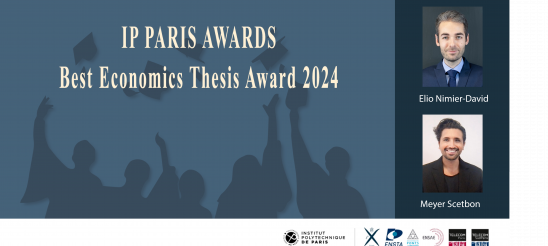
Elio Nimier-David & Meyer Scetbon: 2024 IP Paris Thesis Prize in economics
Welcome at CREST: Introducing our latest recruits.

Each year, CREST goes beyond its borders to find new minds to keep on offering pioneer research. This year, CREST was able to attract new talents from all around the world (Canada, France, Italy, Switzerland, UEA, UK and USA). These new recruits bring with them a wealth of knowledge, diverse experiences, and a passion for pushing the boundaries of their respective fields. New recruits is always very much appreciated by our PhD students and students from ENSAE Paris, ENSAI and École polytechnique, where they may teach as they arrive with a different background and knowledge base.
As CREST continues to produce groundbreaking research about and for society, the arrival of these scholars marks a significant milestone in our journey. Each professor brings unique expertise that will not only enhance our ongoing projects but also open new avenues for exploration and discovery.
In this article, we will introduce you to our new researchers, delve into their backgrounds, and share their specializations that will contribute to the vibrant research environment at CREST.
Economics
Laurent Bach, Visiting Professor (ESSEC)

Interests: Entrepreneurial Finance, Corporate Governance, Household Finance, Public Economics, Political Economy
Current position: Laurent is currently and Associate Professor of Finance at ESSEC Business School
Laurent completed is PhD from Paris School of Economics in 2010
Federico Di Pace, Associate Professor (ENSAI)

Interests: Monetary Economics, macro-labor, international economics and applied econometrics
Previous position: Federico was previously a Senior Economist at the Bank of England.
Experienced Senior Economist with a demonstrated history of working in the academia and central banking, Federico conducted economic research with particular focus on labor markets and its interaction with monetary policy. He has conducted academic policy pieces using applied theory and time series econometrics. Federico completed his PhD in Economics at Birkbeck College, University of London.
https://sites.google.com/site/federicodipace/home?authuser=0
Yameng Fan, Assistant Professor (ENSAI)

Interests: Macroeconomics of labor markets, political economy, market power and spatial economics.
Previous position: PhD in Economics from Universitat Pompeu Fabra.
Florian Grosset, Assistant Professor (ENSAE Paris, Institut Polytechnique de Paris)
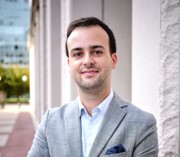
Interests: Development and environmental economics with interests in labor and firms
Previous position: PhD in Sustainable Development from Columbia University
The first strand of his research focuses on labor and networks in lower-income countries. His work explores how individuals’ labor supply decisions are influenced by their social network members, primarily with field experiments. The second strand of Florian’s research focuses on firms’ responses to environmental changes. It combines insights from the natural sciences with applied micro-economic tools for causal identification.
Marion Leroutier, Assistant Professor (ENSAE Paris, Institut Polytechnique de Paris)

Interests: Applied Environmental Economics focusing on two major environmental issues, ambient air pollution and climate change.
Previous position: Postdoctoral fellow at the Institute for Fiscal Studies.
Marion’s research agenda has two angles. First, she investigates the societal cost of air pollution and the causal impact of climate and environmental policies, with an emphasis on health, productivity and distributional effects. In a second and more early-stage angle, Marion studies the determinants of support for green policies, in particular the role of social norms and identity.
Bertille Picard, Assistant Professor (ENSAI)

Interests: Econometrics, Machine Learning applied to policy evaluation and inequalities.
Previous position: PhD in Economics at Aix-Marseille School of Economics (AMSE)
Yuki Tamura, Assistant Professor (École polytechnique, Institut Polytechnique de Paris)

Interests: Micoeconomic Theory, Market Design, Social Choice and Political Economy.
Previous position: Postdoctoral Associate at the Center for Behavioral Institutional Design, NUY Abu Dhabi.
Finance-Insurance
Roxana Dumitrescu, Associate Professor (ENSAE Paris, Institut Polytechnique de Paris)

Interests: Financial Mathematics, Stochastic Control, Stochastic Differential Games, Mean-field Games, Backward Stochastic Differential Equations, Energy Markets, Machine Learning.
Previous position: Associate Professor in Financial Mathematics at King’s College of London.
Sociology
Samuel Rufat, Assistant Professor (École polytechnique, Institut Polytechnique de Paris)

Interests: Urban Geography, Urban Studies, Spatial Analysis, Socio-Economic Inequalities, Segregation, Socio-Spatial Reconfigurations, Environmental justice, …
Previous position: Lecturer at CY Cergy Université Paris Cité (Géographie-cités)
Hesu Yoon, Assistant Professor (ENSAE Paris, Institut Polytechnique de Paris)

Interests: Inequality, Poverty, and mobility, Community and Urban Sociology, Race, Gender and Class, Cultural Sociology, Social Psychology, Computational Social Science, Mixed Methods.
Previous position: PhD in Sociology at Stanford University.
Hesu’s research asks longstanding questions about spatial inequality in urban sociology: Why do some neighborhoods (or cities) grow by attracting people and capital while others do not? How does this place stratification intersect with racial and class-based inequalities? Combining experimental, computational, and qualitative approaches, she interrogates high-status consumers and place entrepreneurs – such as business owners, landlords, and travel writers – who have the power to mold physical, economic, and symbolic urban landscapes.
Statistics
Vincent Divol, Assistant Professor (ENSAE Paris, Institut Polytechnique de Paris)

Interests: Topics at the intersection of statistics and geometry, including statistical optimal transport, geometric inference and topological data analysis.
Previous position: Junior AI Fellow at Université PSL.
Marie-Pierre Etienne, Associate Professor (ENSAI)

Interests: Development of statistical methods for ecology.
Previous position: Assistant Professor at Agrocampus Ouest.
Marie-Pierre is mainly interested in the use of stochastic processes to model and infer biological processes, particularly ecological processes.
Recently she focused mainly on movement ecology application and the development of statistical methods to extract knowledge from the study of animals, but also fishing vessels movement.
Sébastien Herbreteau, Assistant Professor (ENSAI)

Interests: Statistical and Machine Learning Methods for image processing, inverse problems, optimization and mathematical understanding of neural networks.
Previous position: Postdoctoral Fellow in the Biomedical Imaging Group at the Ecole Polytechnique Fédérale de Lausanne.
Emmanuel Pilliat, Assistant Professor (ENSAI)

Interests: Machine Learning and High-Dimensional Statistics.
Previous position: Postdoctoral Fellow at ENS Lyon.
Ludovic Stephan, Assistant Professor (ENSAI)

Interests: Random graphs, inference problems, machine learning theory.
Previous position: Postdoctoral Fellow in the idePHICS lab at Ecole Polytechnique Fédérale de Lausanne.
My research interests involve the rigorous study of statistical-physics inspired methods, from belief propagation to replica equations.